For distributors already selling diesel engines or generator sets, the parts line is often the more profitable business. Recurring demand is predictable, order values are smaller and easier to place, and customers return on a cycle rather than once per equipment purchase. Building a private-label parts range lets you own that relationship instead of handing it to a competitor who happens to stock the same turbocharger.
Why Parts Suit Private Label Better Than Whole Machines
Volume economics. Parts are compact, so tooling and packaging investment is amortised across many units rather than dozens.
Repeat demand. Filters, gaskets and wear components are consumed on a service schedule.
Lower refusal risk. A customer comparing a branded filter or gasket decides on price, availability and packaging much faster than a customer committing to a whole generating set.
Cross-selling. A parts catalogue keeps your brand in front of the customer between major equipment purchases.
The Categories Worth Carrying
A practical private-label parts range usually covers four groups:
Air and fuel management. Air filters, fuel filters and filter assemblies, fuel injection pumps, injectors and feed pumps. These are the highest-frequency consumables.
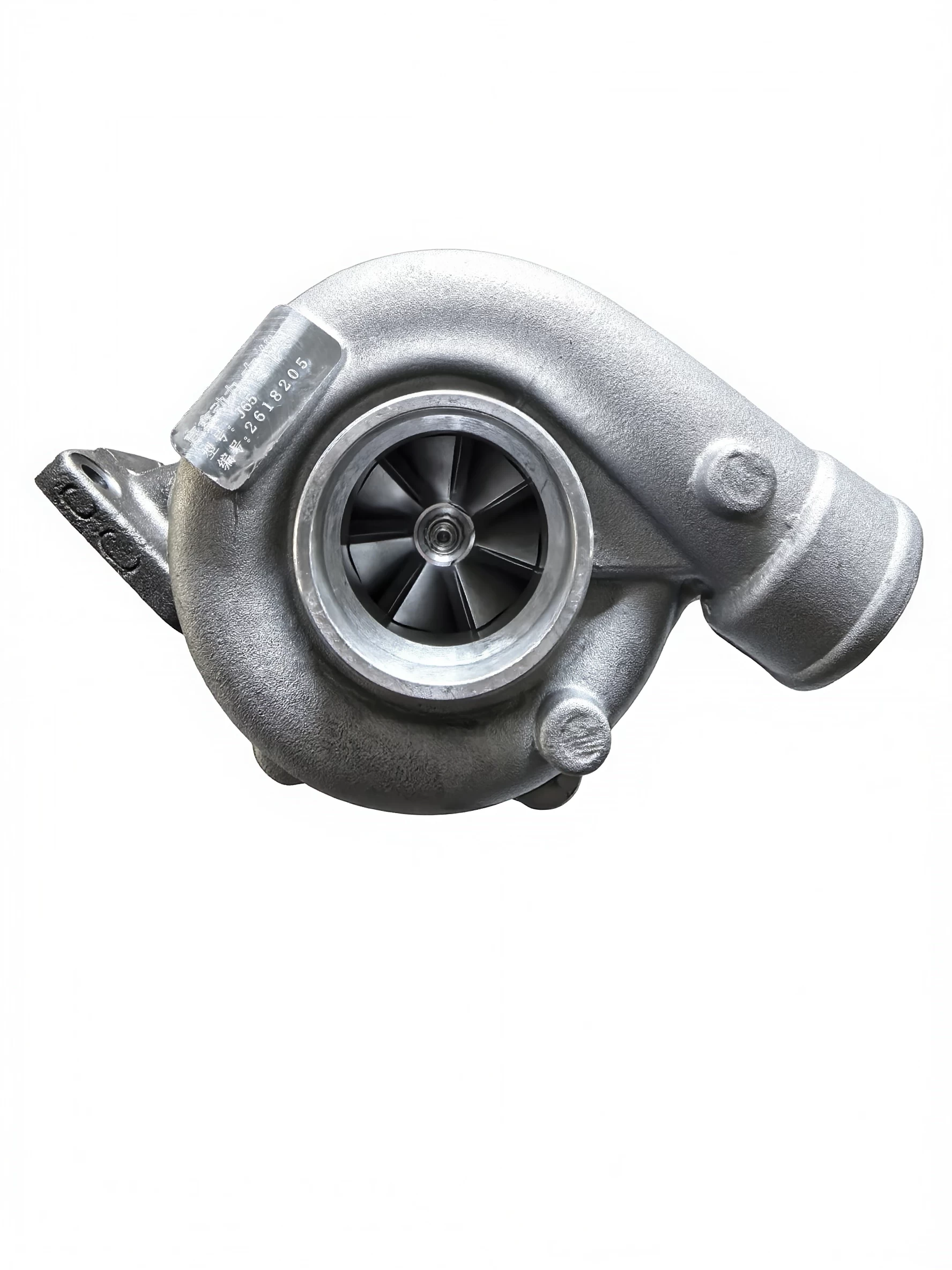
Turbocharging and exhaust. Turbochargers, exhaust manifolds, mufflers and connecting pipework. Higher unit value, and often the first major component to fail on a hard-worked engine.
Cooling system. Cooling fan blades, water pumps, thermostats, radiators and hoses. Critical in hot and dusty markets where cooling is the limiting factor.
Valve train and internal components. Cylinder heads, rocker arm assemblies, valve covers and gasket sets. Typically sold as part of a top-end rebuild package.
Beyond individual parts, consider assembling scheduled service kits - fuel filter, oil filter, air filter and gaskets in one box matched to a specific engine model and service interval. Kits are easier for the end customer to buy correctly and raise average order value.
Fitment Data Is the Whole Business
A branded parts line fails for one reason more than any other: fitment errors. Turbochargers and injection pumps in particular are model- and often revision-specific, and a part that looks correct can be wrong for the application.
Before listing any part, confirm and document:
Engine series and model it is designed for
Engine serial number ranges or production periods covered
Where more than one revision exists, the distinguishing features of each
Whether the part requires matching components to be changed at the same time
Key dimensions that a technician can check before installation
Ask the manufacturer for an explicit fitment table rather than relying on a photograph. Photographs of similar-looking castings are the single biggest source of returns in this category.
Packaging and Branding That Carry the Value
On a parts line, packaging is not decoration - it is the product experience, and often the only place your brand appears. Specify:
Printed boxes or cartons with your logo, part number and description
A label with the engine model and application stated prominently, so the customer can verify fitment before opening
Protective packaging appropriate to the part - foam or wrap for machined surfaces, sealed bags for gaskets and bearings
An installation note covering torque figures and any paired components
Barcode or QR label linking to your own online catalogue
Where a part is heavy or easily damaged in transit - turbochargers, cylinder heads, manifolds - packaging cost is not the place to economise. Transit damage produces returns that consume the margin on the sale several times over.
Controlling Returns and Warranty
A branded parts line carries your reputation, so define the terms before the first order:
What evidence is required for a warranty claim - photographs, part number, engine details, installation notes.
Whether returns are credited, replaced or assessed before a decision is made.
Who bears freight on a warranty replacement, and how the claim is closed.
Which failures are excluded - incorrect installation, contaminated fuel, overspeed or overheating caused by other faults.
Most disputes in this category come from a part installed on the wrong engine revision. A clear fitment table and a short installation note prevent more claims than any warranty clause.
Quality Documentation to Ask For
Material and dimensional inspection records for machined components.
Balance and run-out reports for turbocharger rotating assemblies.
Flow and pressure test results for injection pumps.
Pre-delivery inspection records for the batch being shipped.
Programme Checklist
Part categories chosen against your existing engine population, not a generic catalogue.
Fitment table documented for every part number, including engine revisions.
Packaging specified for protection first, branding second.
Service kits assembled for the most common engine models and intervals.
Warranty terms, claim evidence and freight responsibility agreed in writing.
Batch inspection records and test reports requested before shipment.
Online catalogue or parts lookup prepared so buyers can self-verify fitment.
Shandong Yihai Power Machinery Co., Ltd. supplies diesel engine components including turbochargers, exhaust manifolds, cylinder heads, rocker assemblies, fuel injection pumps, fuel filter assemblies, cooling fan blades, voltage regulators and drain valves for Weifang engine series, and supports OEM and ODM parts programmes covering branding, packaging, fitment documentation and service kit assembly. Contact us with your engine population and target part list to discuss configuration and pricing.