
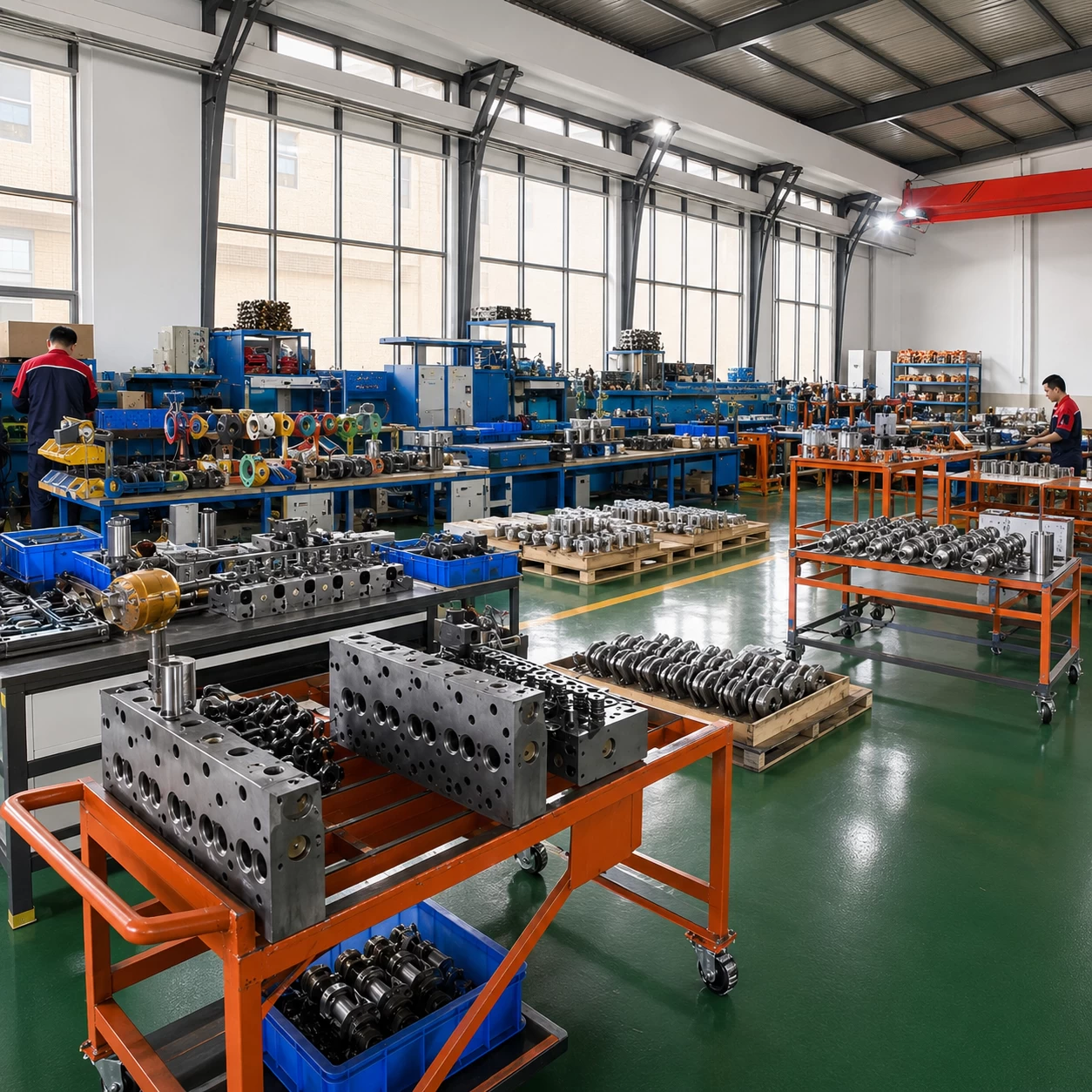
1. Why Preventive Diesel Engine Maintenance Matters
Diesel engines operate under continuous heat, pressure and mechanical load.
During normal operation, components are exposed to:
Combustion pressure
High temperature
Lubrication cycles
Vibration
Dust
Fuel contaminants
Cooling-system stress
Some components naturally wear over time.
Preventive maintenance helps identify problems before they become serious enough to stop the engine.
For equipment owners, the objective is not simply to repair a failed engine.
The objective is to reduce unplanned downtime.
2. Build a Maintenance Schedule Based on Operating Hours
Diesel engine maintenance is normally organized around operating hours rather than calendar time alone.
The exact maintenance interval should follow the applicable engine manual and operating conditions.
Machines used in severe conditions may require more frequent attention.
Examples of severe conditions include:
Mining
Crushing operations
Dusty construction sites
High-temperature environments
Continuous generator operation
Agricultural environments
Heavy loading
Operators should maintain an engine service record including:
Operating hours
Oil changes
Filter replacement
Cooling-system service
Repairs
Replaced parts
Unusual operating symptoms
A simple maintenance record can be extremely useful for diagnosing future problems.
3. Engine Oil: One of the Most Important Maintenance Items
Engine oil lubricates moving components and helps reduce friction and wear.
Oil condition can deteriorate because of:
Heat
Combustion contamination
Dust
Fuel dilution
Extended service time
Operators should regularly check:
Oil level
Oil appearance
Leakage
Oil pressure
Service interval
Running an engine with insufficient or degraded lubrication can result in serious internal damage.
Use the lubricant specification recommended for the engine and operating environment.
4. Replace the Oil Filter Correctly
The oil filter removes contaminants from the lubrication system.
As contaminants accumulate, filter performance may decrease.
Changing oil without considering the filter may reduce the effectiveness of the maintenance process.
When replacing an oil filter:
Confirm the correct part.
Follow proper shutdown procedures.
Inspect the old filter for abnormal contamination.
Install the new component correctly.
Check for leakage after starting.
Confirm normal oil pressure.
Always follow the applicable engine maintenance instructions.
5. Fuel Filters Protect the Injection System
Diesel fuel systems require clean fuel.
Contamination can affect fuel delivery and injection components.
Possible contaminants include:
Dirt
Rust
Water
Storage tank debris
A fuel filter helps prevent these contaminants from reaching sensitive components.
Poor fuel quality can result in:
Difficult starting
Unstable operation
Reduced power
Increased smoke
Injection-system problems
For generators and machines operating in remote areas, maintaining clean fuel storage is just as important as replacing the filter.
6. Check the Air Filter Regularly
Diesel engines require large quantities of air.
In dusty environments, the air filtration system is particularly important.
A blocked or damaged air filter may affect engine performance.
Construction machinery, agricultural machinery and mining equipment often operate in environments containing large amounts of dust.
Operators should therefore inspect:
Filter element condition
Filter housing
Intake pipes
Clamps
Connections
Never allow unfiltered air to enter the engine through damaged intake components.
7. Cooling-System Maintenance
A diesel engine generates significant heat.
The cooling system helps maintain an appropriate operating temperature.
Important components can include:
Radiator
Coolant
Water pump
Thermostat
Cooling fan
Hoses
Belts
Operators should regularly inspect coolant level and check for leaks.
Overheating should never be ignored.
If an engine frequently operates at abnormally high temperature, the underlying cause should be identified instead of simply adding coolant repeatedly.
8. Check Belts and Hoses
Belts and hoses may appear simple, but a failure can stop the complete machine.
Check for:
Cracks
Excessive wear
Hardening
Looseness
Leakage
Damage around clamps
Replacing an aging hose during scheduled maintenance is usually easier and cheaper than dealing with a failure during operation.
9. Battery and Starting-System Maintenance
Many Weifang diesel engines use electric starting systems.
A weak battery can prevent an otherwise healthy engine from starting.
Check:
Battery charge
Terminal corrosion
Cable connections
Starter wiring
Charging condition
Standby generator owners should pay particular attention to batteries because a generator may remain unused for long periods and still be expected to start immediately during a power outage.
10. Cylinder Head: A Critical Diesel Engine Component
The cylinder head plays an important role in the combustion process.
Depending on the engine design, it contains or supports components associated with:
Intake
Exhaust
Valves
Injectors
Combustion chambers
Possible symptoms associated with cylinder-head or related problems can include:
Coolant loss
Abnormal smoke
Reduced compression
Difficult starting
Overheating
Reduced engine power
These symptoms can also have other causes, so proper diagnosis is important before replacing components.
When purchasing a replacement cylinder head, confirm the exact engine model and configuration.
Parts that appear visually similar may not always be interchangeable.
11. Rocker Arm Assembly
The rocker arm mechanism forms part of the valve train.
It helps control the opening and closing of the intake and exhaust valves according to engine timing.
Wear or incorrect adjustment in the valve train may contribute to:
Abnormal mechanical noise
Incorrect valve clearance
Reduced performance
Poor combustion
When ordering rocker arms or complete assemblies, model identification is especially important.
Different versions of the same general engine family may use different configurations.
12. Turbocharger Maintenance
Turbochargers are used on many diesel engines to increase the quantity of air entering the engine.
A turbocharger operates at high speed and under high temperatures.
Proper lubrication and clean intake air are therefore particularly important.
Possible signs of turbocharger problems may include:
Loss of engine power
Abnormal turbo noise
Oil leakage
Excessive smoke
Poor boost performance
However, these symptoms do not automatically mean the turbocharger itself has failed.
Blocked filters, intake leaks, exhaust restrictions and engine problems can produce similar symptoms.
Diagnosis should be performed before replacing the unit.
13. Exhaust and Muffler Components
The exhaust system carries combustion gases away from the engine and helps manage exhaust noise.
Typical components may include:
Exhaust manifold
Piping
Flexible connectors
Muffler
Mounting hardware
Inspect the exhaust system for:
Cracks
Loose connections
Gas leakage
Corrosion
Damaged supports
Exhaust leaks should be addressed promptly, especially for generator sets installed in enclosed machine rooms.
14. Engine Gaskets and Seals
Gaskets and seals help prevent oil, coolant and gas leakage between engine components.
Over time, thermal cycling and mechanical stress may cause deterioration.
Common signs requiring inspection include:
Engine oil leakage
Coolant leakage
Oil contamination
Abnormal pressure
Visible wet areas around joints
When an engine is disassembled for major component replacement, related gaskets may also need replacement according to the repair procedure.
15. Keep Critical Spare Parts in Stock
For commercial operators, downtime can cost far more than the price of a spare part.
Companies operating multiple engines should consider maintaining an appropriate inventory of common maintenance and repair components.
Depending on the engine and operation, these may include:
Oil filters
Fuel filters
Air filters
Belts
Hoses
Gaskets
Seals
Sensors
Rocker arm components
Cylinder-head components
Turbocharger-related parts
Exhaust components
The ideal spare-parts list depends on the engine model, operating environment and number of machines.
16. Why Correct Engine Identification Is Essential
One of the most common problems when buying diesel engine spare parts is incomplete model information.
A buyer may request:
"I need a cylinder head for a Weifang diesel engine."
This is often not enough.
Suppliers may need information such as:
Engine model
Engine nameplate
Serial information
Number of cylinders
Bore/stroke or displacement information where relevant
Naturally aspirated or turbocharged configuration
Generator, machinery or marine application
Photos of the original part
Part number if available
Providing accurate information helps reduce the risk of receiving an incompatible component.
17. Take Photos Before Ordering Spare Parts
For replacement parts, photographs can be extremely useful.
Take clear photos showing:
Complete engine
Engine nameplate
Old component
Front view
Rear view
Connection points
Casting number or part number
Dimensions when necessary
Do not rely only on one photo taken from a distance.
The more clearly the supplier can identify the original component, the easier it is to confirm compatibility.
18. Avoid Selecting Parts Only by Appearance
Diesel engine parts from related engine families can look very similar.
However, small differences in:
Mounting holes
Oil passages
Water passages
Valve configurations
Thread sizes
Connections
Dimensions
can make two visually similar components incompatible.
Always confirm engine and part information before ordering.
19. Common Weifang Engine Applications
Weifang diesel engine families are used across different power-equipment applications.
Typical uses include:
Diesel generator sets
Construction machinery
Agricultural machinery
Water pump sets
Concrete machinery
Air compressors
Marine auxiliary applications
Other industrial equipment
Operating conditions can vary greatly between these applications.
A generator operating at a fixed speed in a clean machine room does not experience the same environment as an engine working on a dusty construction site.
Maintenance planning should therefore reflect the actual application.
20. Preparing a Spare-Parts Inquiry
To receive a faster and more accurate quotation, send the supplier:
Engine Model:
For example, the exact Weifang engine model shown on the nameplate.
Required Part:
Cylinder head, rocker arm, turbocharger, muffler or another component.
Part Number:
If available.
Quantity:
One replacement unit or bulk requirement.
Application:
Generator, construction equipment, agricultural equipment, marine equipment, etc.
Photos:
Engine nameplate and original component.
Destination Country:
Required for transportation quotation.
21. Preventive Maintenance Reduces Long-Term Cost
Some buyers postpone maintenance to reduce immediate expenses.
However, ignoring a small problem can result in a much larger repair.
For example:
A damaged hose can cause coolant loss.
Coolant loss can cause overheating.
Severe overheating can damage major engine components.
Similarly:
Poor air filtration can allow contamination into the engine.
Contamination can accelerate internal wear.
Internal wear can eventually require major repair.
Preventive maintenance is therefore part of controlling the total operating cost of diesel equipment.
Yihai Power Diesel Engines and Spare Parts
Shandong Yihai Power Machinery Co., Ltd. supplies diesel engines and related replacement components for multiple power and machinery applications.
The current engine product range includes Weifang 4R, 490, 6R and ZH series products, while replacement-product categories include components such as cylinder-head assemblies, rocker-arm assemblies, turbochargers and exhaust-system parts.
When requesting spare parts, customers are encouraged to provide the engine model, nameplate information and clear photos of the original component.
This makes model confirmation much more accurate.
Conclusion
Reliable diesel engine operation depends on both correct equipment selection and long-term maintenance.
Operators should pay particular attention to:
Engine oil
Oil and fuel filters
Air filtration
Cooling system
Belts and hoses
Starting battery
Cylinder-head components
Valve-train components
Turbocharger
Exhaust system
Spare-parts inventory
For replacement parts, correct model identification is essential.
A few minutes spent photographing the engine nameplate and original component can prevent costly purchasing mistakes.
Looking for a Weifang diesel engine or replacement parts?
Send Yihai Power your engine model, nameplate photo, required part, quantity and destination country. Our team can help identify a suitable engine or spare-part solution for your equipment.