
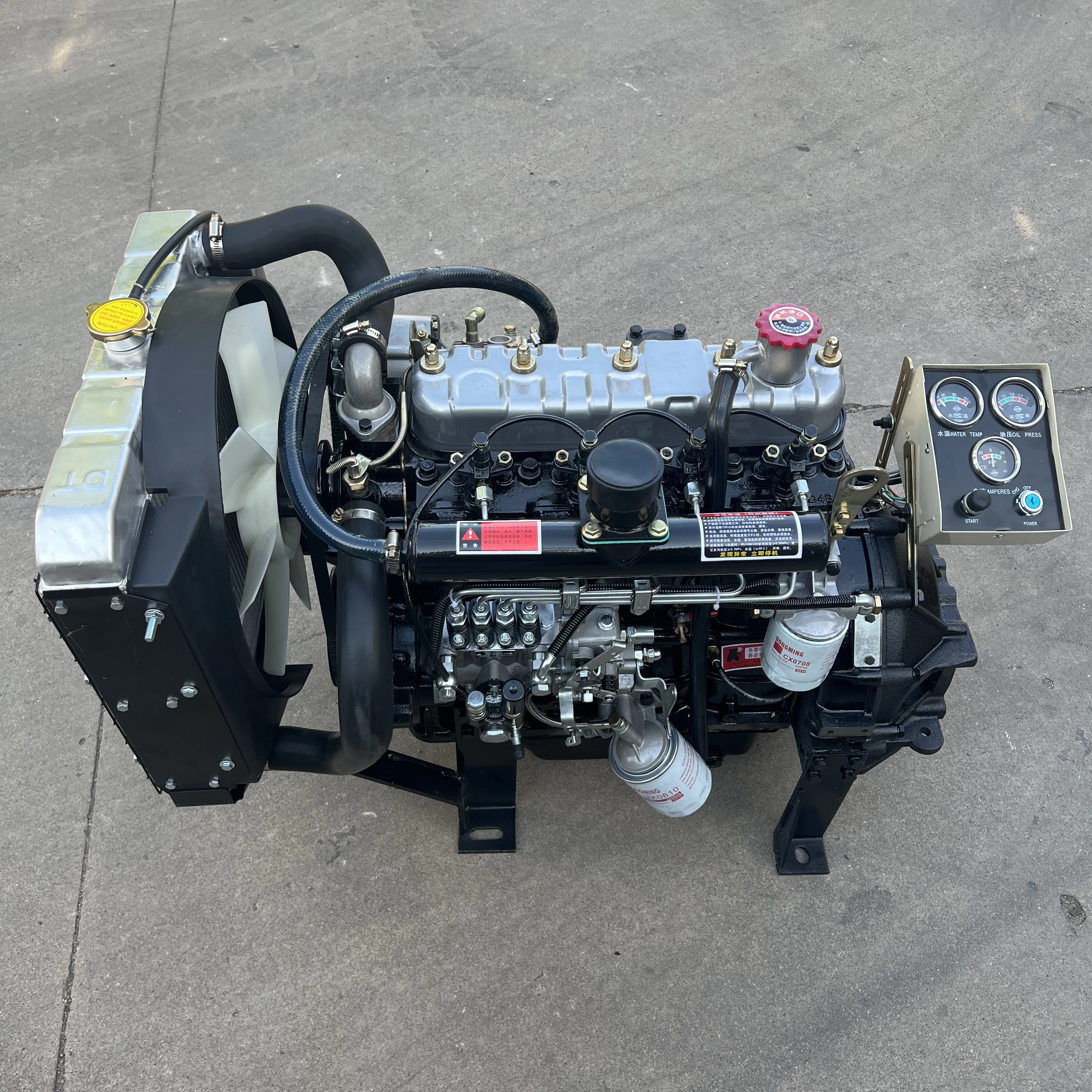
Industrial buyers rarely need exactly the generator that appears in a standard catalogue. A construction contractor needs mobility. A hospital needs automatic standby with clean transfer. A factory on a dusty site needs a ruggedised configuration. A residential development needs noise control. Configuring a generator set for the actual project - rather than buying the nearest catalogue model - is where value is created, and it is the core of what a custom power programme delivers.
Start With the Load, Not the Catalogue
Generator sizing is the foundation, and simply adding the rated wattage of every device on site is the most common and most expensive mistake. What matters is the shape of the load:
Continuous load. The steady demand that runs for hours at a time.
Peak load. The highest simultaneous demand the site can create.
Motor starting current. Motors, pumps, compressors, crushers and elevators can draw several times their rated current during start-up. This figure, not the running load, often decides the generator rating.
Future expansion. Capacity added later is cheaper to allow for now than to retrofit.
Provide the supplier with an equipment list rather than a single number. A detailed list allows the configuration to be sized against real starting behaviour instead of an assumption.
Choosing the Enclosure Type
Open type. Lowest cost, easiest maintenance access and good heat dissipation, provided the set is installed in a properly ventilated generator room with exhaust routing.
Silent enclosure. Acoustic treatment with managed air inlet and outlet paths, suitable for residential areas, hospitals, offices and hotels, and for outdoor installation where weather protection is needed.
Trailer mounted. A generator set on a trailer chassis with wheels, towing structure, support legs, fuel tank and cable connections, for construction, mining, road and infrastructure work where power must move as the job progresses.
Containerised or skid mounted. For larger projects where a permanent or semi-permanent power house is required.
A silent enclosure is not automatically better than an open set. If the customer already has a dedicated generator room, an open set may be more economical and much easier to service.
Control System and Operating Logic
The control panel is where a custom configuration earns its keep:
Manual start. Appropriate where an operator is always present.
Automatic mains failure (AMF). Detects a grid outage, starts the set and transfers the load, then transfers back when mains power returns. Essential for hospitals, data facilities, banks, telecoms and commercial buildings.
Parallel operation. Two or more sets synchronised for flexible capacity, redundancy and easier expansion. This requires proper synchronisation, load sharing and protection design, so the complete load profile must be discussed with the supplier.
Remote monitoring. Increasingly expected by fleet operators, and a credible premium feature for rental and leasing businesses.
Fuel System Configuration
Fuel capacity follows the operating strategy, not the tank that happens to be standard. A standby set that runs during occasional outages has very different requirements from a set supplying continuous power at a remote construction camp. Consider expected operating hours, refuelling logistics, available space and local safety requirements. An undersized tank causes unnecessary interruptions; an oversized one wastes money and space.
Configuring for the Environment
Diesel engines lose output as conditions worsen, so the installation environment must be declared at the inquiry stage:
Ambient temperature. High temperatures affect cooling performance and available output.
Altitude. Thin air reduces available engine power and usually requires derating.
Dust. Mining, crushing and construction sites need heavier filtration and more frequent service intervals.
Humidity and coastal air. Require attention to corrosion protection on enclosures, terminals and fasteners.
Serviceability as a Design Requirement
Even a high-quality generator needs routine maintenance - engine oil, oil filters, fuel filters, air filters, coolant, belts, hoses and batteries. The configuration must leave enough space for a technician to work. When planning a generator room, do not position equipment so close to walls that normal service becomes difficult. On enclosed sets, confirm that maintenance doors give genuine access to the service points rather than just to the outside of the engine.
What to Send for a Custom Configuration Quote
Required power in kW or kVA, if already known
Application: factory, construction, mining, hospital, building, marine or other
Load equipment: motors, pumps, compressors, lighting, machinery
Duty type: prime power or standby power
Enclosure preference: open, silent, trailer, container or skid
Voltage, frequency (50 or 60 Hz) and phase
Operating environment: indoor, outdoor, altitude, dust, humidity
Destination country, for configuration and shipping planning
Configuration Checklist
Load list collected, including motor starting requirements.
Prime or standby duty confirmed, with derating applied for site conditions.
Enclosure type matched to noise, weather and mobility needs.
Control system specified: manual, AMF, parallel or remote monitoring.
Fuel capacity sized to the real operating strategy.
Corrosion and filtration provisions matched to the environment.
Service access verified before the configuration is frozen.
Shandong Yihai Power Machinery Co., Ltd. configures diesel generator sets as open type, silent enclosure, trailer mounted and skid or container solutions, with manual, automatic standby and parallel control options, and with engine, alternator, fuel system and enclosure specification selected for the project. Send us your load list, environment and destination market, and our team can help evaluate a suitable configuration.